Supporting Disabilities, WASH, and Improve nutrition in Kiramu and Gida Ayana Woreda, East Wolega Zone, Oromia Regional state: A Project-Based Approach
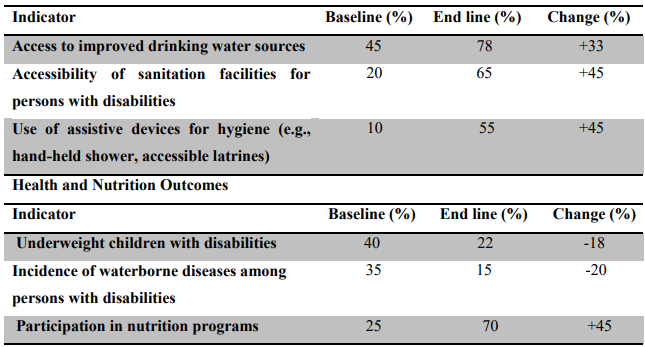
This study examines the challenges and interventions related to improving access to water, sanitation, health, and nutrition services for persons with disabilities in rural districts of Oromia, Ethiopia. Despite policy commitments, persons with disabilities in districts like Kiramu and Gida Ayana face significant physical, social, and economic barriers that hinder their participation and access to essential services. The research employs a mixed-methods approach to assess the current situation, implement accessible infrastructure, and build capacity among local health workers and community members. Results indicate substantial improvements in access to safe water, sanitation facilities, assistive devices, and participation in nutrition programs, leading to notable reductions in waterborne diseases and malnutrition among persons with disabilities. The findings demonstrate that integrated infrastructural, capacity-building, and community engagement strategies can effectively enhance health outcomes and promote social inclusion. Challenges such as cultural misconceptions and resource limitations highlight the need for
sustained, multi-sectoral efforts. The study underscores the importance of inclusive development approaches to address disparities and recommends scaling up accessible infrastructure, disability-sensitive training, community awareness, and robust monitoring to ensure long-term sustainability and broader impact.
sustained, multi-sectoral efforts. The study underscores the importance of inclusive development approaches to address disparities and recommends scaling up accessible infrastructure, disability-sensitive training, community awareness, and robust monitoring to ensure long-term sustainability and broader impact.